Trust yourself when life gets difficult.
Make sense of the emotional and relational patterns shaping how you think, decide, and respond, so you can stay connected to yourself when pressure rises.

You can be incredibly capable
and still…
Lose an entire evening to one conversation because you keep replaying what you said, what they meant, and whether you handled it wrong.
Agree to things you do not want to do, then feel resentful, exhausted, or angry with yourself afterward.
Carry other people’s disappointment as if it were your responsibility, changing plans, decisions or boundaries just to get the tension to stop.
Know exactly what you want until someone pushes back, then start explaining, softening or reopening a decision you were clear about five minutes earlier.
Bring the emotional fallout into the rest of your life: into dinner, your sleep, your work, your relationship, or the time that was supposed to be yours.
Understand your pattern completely and still repeat it, which can be especially frustrating when you are used to being able to solve difficult problems everywhere else.
What changes when you stop abandoning yourself under pressure
This work is not about becoming harder, caring less, or never feeling guilt again. It is about changing what happens after the discomfort shows up.
You start to:
make a decision without reopening it five times afterward
let someone be disappointed without immediately trying to fix it
notice guilt without treating it as proof you did something wrong
stop carrying conversations into the rest of your evening
stay clearer in conflict instead of automatically softening, overexplaining or backing away
trust yourself more because your behaviour starts matching what you already know
Over time it changes how much energy you spend managing other people, how much space these situations take up in your head, and how consistently you can stay connected to yourself in your relationships and decisions.
How I work
Many of my clients, already understand themselves well.
They can often explain why they react the way they do. What is harder is changing what happens when a familiar pattern is activated in real life.
My work looks at the deeper mechanisms behind those responses: the attachment patterns formed through earlier relationships, the way the nervous system responds to emotional threat or uncertainty, and the coping strategies that have become automatic over time.
My approach draws from trauma integration, attachment theory, nervous system regulation and relational analysis.
The aim is not simply to understand the pattern intellectually. It is to increase your capacity to respond differently when the pattern is actually happening.
That means the work moves between understanding, regulation, emotional processing and practical change in how you relate, communicate, make decisions and respond under pressure.
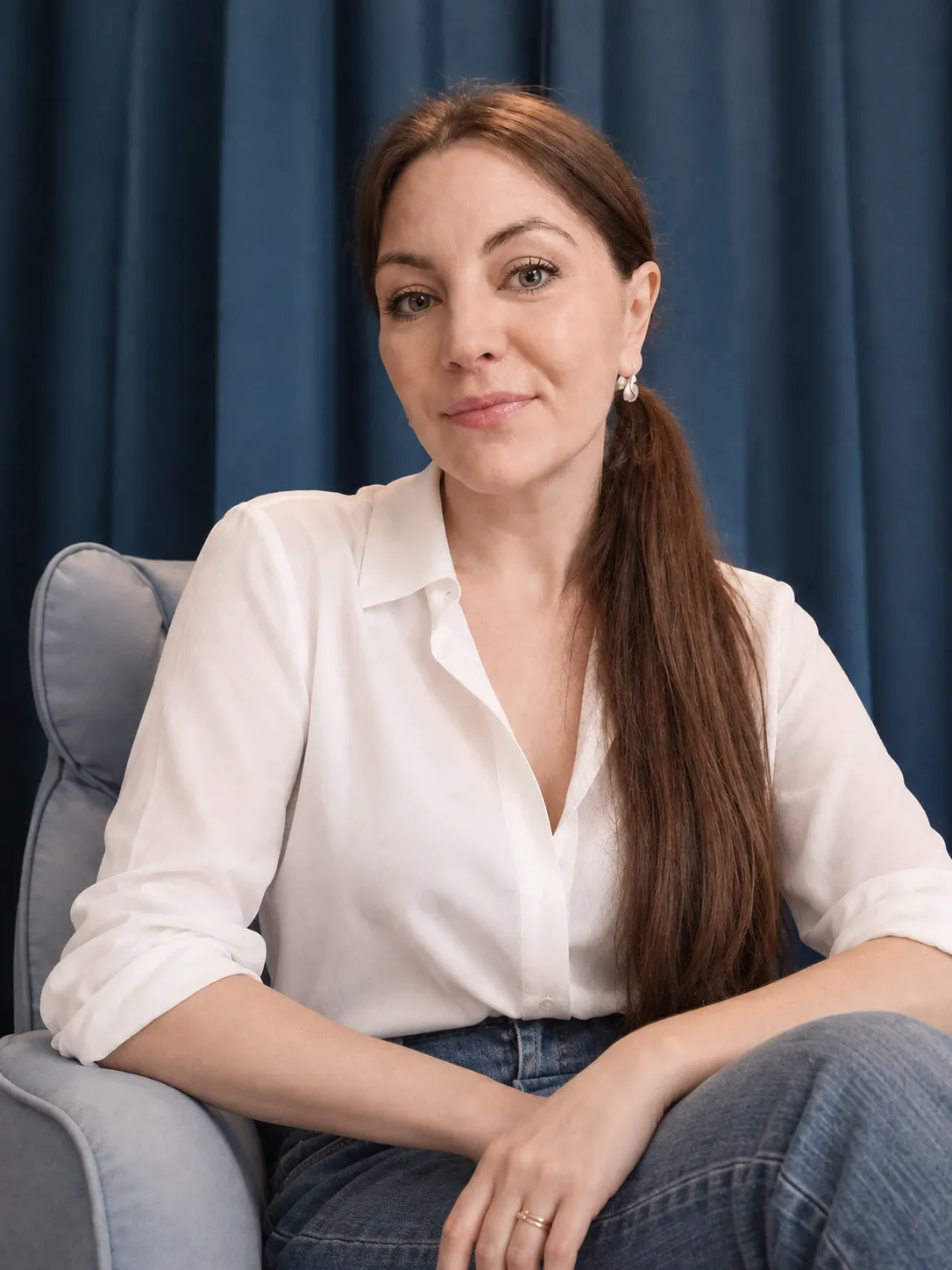
A little about me.
Hi, I am Juliane.
I’m Juliane Staerk, a social scientist (M.A.), and for the past eight years I have worked with people around the way pressure, self-trust, coping strategies and learned responses shape how they think, decide and behave.
I’m also naturally driven.
I moved countries twice. I earned one degree and then another, built a career and became self-employed.
For a long time, I relied heavily on intellect, control, achievement and performance to keep moving forward.
That is part of why this work became so personal to me.
I know how easy it is to look completely capable from the outside while pressure quietly changes the way you think, decide and relate to yourself.
My background combines social science with training in trauma integration, attachment, nervous system regulation and related approaches.
What matters most to me is helping you understand what is actually happening beneath a pattern, rather than simply trying harder to behave differently.
What clients have said about working with Juliane
"I have a choice"
"I don't take everything personal and I am able to step back and think through and process what's going on instead of reacting, I respond."
- Azzadine

"I am more in control now"
"It was only by becoming aware of how often I was being triggered emotionally that we worked on techniques for how best to process such feelings... this was very empowering and helped me feel more in control."
- Sienna
"I stopped feeling like a doormat"
"I learned how to set boundaries with difficult people... I could assert my boundaries and stop feeling like a doormat."
- Roxy
"Recognizing my own needs"
"Recognizing my own needs as well as setting boundaries has helped me feel more secure in myself."
- Benjamin
Ways to work with me
Private Work
For people who want individual support around a current challenge, recurring relationship pattern or something they already understand intellectually but have struggled to change in real life.
The work is tailored to you and can include deeper pattern work, emotional capacity, attachment dynamics, identity and nervous system regulation.
Returning to Yourself
A small live group for women who want to understand and change the patterns that affect how they relate, decide and respond under pressure.
The group is intentionally intimate and allows for both structured teaching and real-life application
The group starts in January 2027, applications are open now.
Not sure which kind of support is right for you?
If something here feels familiar, you don’t need to figure out the right offer first.
Tell me a little about what is going on and what you would like help with, and we can see whether working together makes sense.


Copyrights Juliane Staerk | Terms & Conditions | Privacy Policy